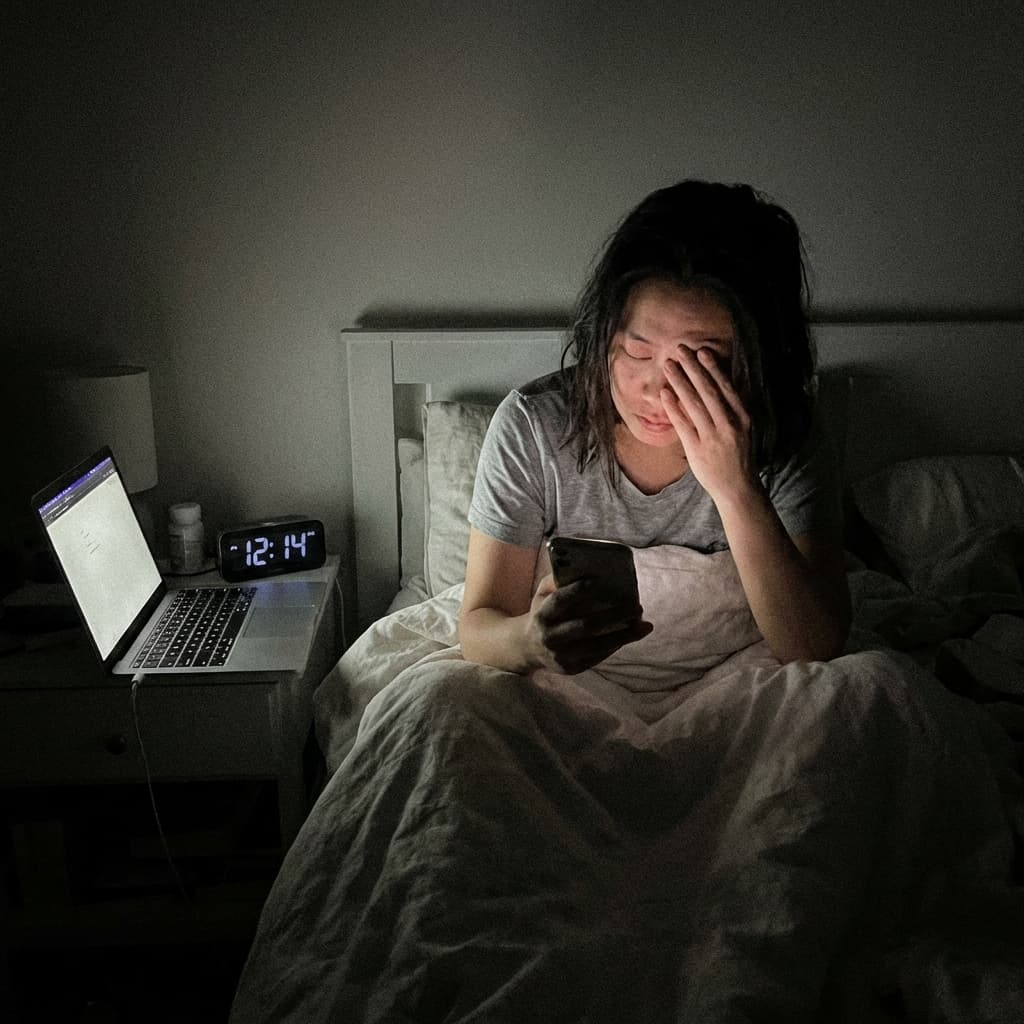
You wake up at 6 AM.
You film three TikToks before breakfast. You edit a LinkedIn post during your commute. You reply to comments on your lunch break. You batch Instagram stories after dinner. You fall into bed at 11 PM, already anxious about tomorrow's content.
This is not sustainable.
It's also not a personality flaw or a time management problem. It's creator burnout, and nearly half of all creators experience it at least once a month.
Here's what nobody tells you: The system is designed to burn you out. Platforms reward constant posting. Audiences expect daily updates. And the fear of being forgotten keeps you posting even when you're exhausted.
But there's a different way.
The Real Cost of Burnout
Burnout isn't just feeling tired. It's chronic emotional and physical exhaustion that makes you resent the work you used to love.
The warning signs:
- You dread opening the app
- Every comment feels like a demand
- You compare yourself to other creators and feel inadequate
- You can't remember the last time you created something without thinking about engagement
- You're documenting moments instead of living them
A 2025 study found that 5 out of 10 creators have experienced burnout severe enough to consider quitting entirely. Another study reported that digital content creators face anxiety, depression, and in extreme cases, suicidal thoughts related to their work.
This isn't dramatic. This is the reality of an industry that tells you to "post every day" without teaching you how to protect your mental health.
Why Content Creation Burns You Out
1. The Pressure Never Stops
Unlike traditional jobs, there's no clock-out time. You're always "on." Your personal life becomes content. Your vacation becomes a photo op. Your mental breakdown becomes a "vulnerable post" that performs well.
The lines between work and life disappear.
2. Fear-Based Motivation
"If I don't post today, the algorithm will punish me."
"If I take a break, my audience will forget me."
"If I'm not trending, I'm failing."
These aren't strategies. They're survival instincts. And they don't work long-term.
3. The Comparison Trap
When you spend 6 hours a day on social media, you're constantly exposed to other creators who seem to have it all figured out. They're posting daily, getting more engagement, building faster.
What you don't see: The team behind them. The burnout they're hiding. The fact that they peaked two years ago and are now faking momentum.
4. Audience Expectations
Your followers expect consistency. They expect replies. They expect you to care about their opinion on everything.
And if you don't meet those expectations? The comments let you know.
How to Create Sustainably
Sustainability isn't about working harder. It's about working smarter and knowing when to stop.
1. Define "Enough"
Most creators never answer this question: "What does success actually look like?"
Is it 10,000 followers? Is it $5,000/month in revenue? Is it creating content you're proud of?
Without a definition of "enough," you'll chase growth forever. And growth is infinite, which means you'll never feel like you've arrived.
Action step: Write down your definition of success. Be specific. "I want to make $3,000/month from my content and post 3x per week without feeling stressed." Now you have a target. Everything else is noise.
2. Batch Content (The Right Way)
Batching isn't just about efficiency. It's about creating boundaries between "creation mode" and "life mode."
How to batch without burning out:
- Pick one day a week (e.g., Sunday afternoon)
- Set a timer for 2-3 hours
- Create 5-7 posts in one session
- Schedule them using a tool like Broadr
- Close the app and forget about it for the rest of the week
The key: Don't check engagement daily. Check once or twice a week. You don't need to respond to every comment within 30 minutes.
3. Set Content-Free Zones
Your life needs spaces where content doesn't exist.
Examples:
- No phone during dinner
- Weekends are off-limits for filming
- Vacations have zero posting requirements (you can schedule content in advance)
- One full day per week with zero social media
These aren't luxuries. They're necessities.
4. Embrace "Good Enough"
Perfect posts take 3 hours. Good posts take 30 minutes.
The difference in engagement? Usually negligible.
Stop editing your caption 12 times. Stop retaking the same photo until the lighting is perfect. Post it, move on, and spend the saved time doing literally anything else.
5. Outsource What Drains You
You don't have to do everything yourself.
- Hate editing? Hire an editor.
- Can't write captions? Use AI to draft, then refine.
- Overwhelmed by scheduling? Use a scheduling tool.
- Struggling with ideas? Repurpose old content.
Delegation isn't cheating. It's survival.
6. Take Breaks (And Tell Your Audience)
Here's the thing most creators don't realize: Your audience is more understanding than you think.
Post a story: "Taking the next two weeks off to recharge. See you soon."
90% of responses will be supportive. The other 10% don't matter.
And if you're worried about the algorithm? Schedule 1-2 posts to go out while you're gone. But don't check engagement. That's not a real break.
The 80/20 Rule for Sustainable Content
80% of your results come from 20% of your effort.
Apply this to content:
- 80% of your engagement comes from 20% of your posts (focus on formats that work)
- 80% of your ideas come from 20% of your research (stop doom-scrolling for "inspiration")
- 80% of your growth comes from 20% of your platforms (quit trying to be everywhere)
Stop spreading yourself thin. Double down on what's working. Cut the rest.
Use Tools That Don't Require You to Be "On"
This is where Broadr comes in.
Most scheduling tools still require you to manually post, check analytics, and respond in real-time. They're productivity tools, not burnout prevention tools.
Broadr is different:
- Batch your content once a week
- Schedule it across all platforms
- Check performance when you decide, not when the app begs for your attention
- Built for creators who have lives outside of social media
We're not trying to keep you on the platform. We're trying to get you off it.
The Litmus Test for Sustainability
Before you commit to a new content strategy, ask yourself:
"Can I do this every week for the next year without resenting it?"
If the answer is no, it's not sustainable. Simplify until the answer is yes.
You don't need to post daily. You don't need to be on every platform. You don't need to reply to every comment.
You need a strategy that lets you create without breaking.
Because if you burn out and quit, your audience loses anyway.